

Many Shenzhen foreign trade companies get stuck at the website stage—despite having excellent products, they fail to secure orders. The problem isn’t the market—it’s the underlying website architecture. We’ve analyzed five successful cases to show you how to use technology to drive traffic and data to boost profits.

Custom websites increase conversion rates by over 40%, yet 60% of budgets are wasted due to uncontrolled requirements. We break down a five-step method to make every dollar spent measurable.

Building a website in Shenzhen isn’t difficult—it’s the lack of focus on delivering real value that makes it challenging. The difference between spending 80,000 and 300,000 isn’t in the number of pages but in whether the site actually brings in customers. We’ve broken down five critical decision points to help turn your budget into a growth engine.
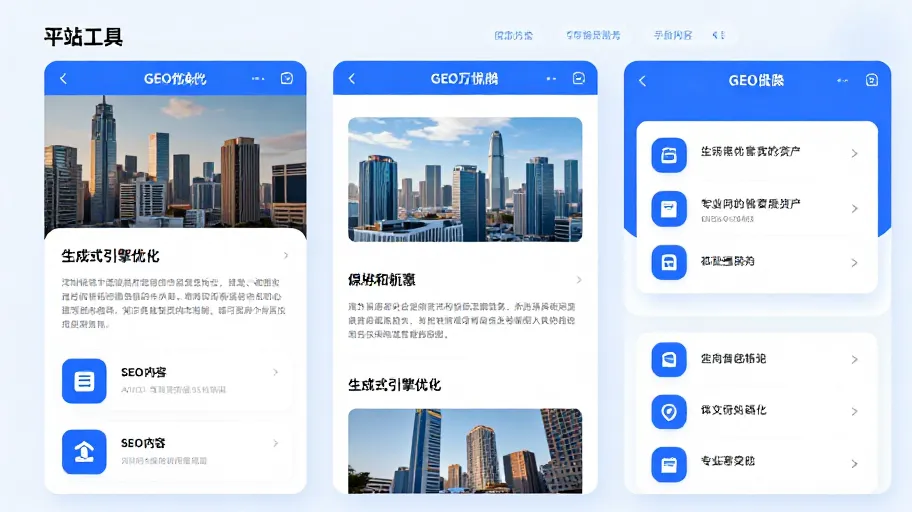
Whether GEO optimization is worth pursuing depends on three key questions: Is your customer already using AI-powered Q&A tools to find suppliers? Do your existing SEO contents have a structure suitable for AI citation? And can you accept measuring results through "citations and mentions" rather than just rankings? If two out of these three answers are "yes," then GEO optimization should be included in your next planning phase. If most answers are "no," it's more practical to first solidify your SEO foundation. This article does not aim to sell anything; instead, it provides a self-assessment framework and an execution checklist to help you determine scope, investment, and acceptance criteria.

Building a free independent site is no longer just about putting up a page. GEO positioning, AI-powered CRM, and a self-sufficient customer acquisition system are reshaping growth logic. We break down a five-step implementation method to help you launch a thinking, converting engine within 72 hours.

When search traffic can automatically recognize user intent and trigger sales responses, businesses no longer need to burn money buying leads. We dissected three real-world cases to show how small and medium-sized enterprises can build scalable, self-sustaining customer acquisition systems using GEO and AI CRM integration.

Before launching a website development project in Shenzhen, the most important step is not choosing a vendor but clearly defining the requirements, scope, and acceptance criteria. The success of a website project largely depends on whether the requirements have been thoroughly clarified before starting, whether the implementation scope has been locked down at the time of signing, and whether an actionable acceptance checklist exists upon delivery. This article provides a ready-to-use framework and checklist to help small and medium-sized enterprises, manufacturing companies, and foreign trade businesses in Shenzhen and the Greater Bay Area think through these three critical aspects prior to project initiation.

Today's Shenzhen web design is no longer just about changing a banner. It has become a core lever for businesses to acquire customers, drive conversions, and reduce costs. We've dissected five successful cases to reveal what true experts do.

When AI CRM meets GEO optimization, customer acquisition stops being a war of attrition. We break down the five-step method for building a closed loop, turning every click into growth fuel. Data no longer sleeps; leads convert in real time—this is what customer operations look like in the intelligent era.
Traditional independent sites face the dilemma of low regional conversion rates. GEO independent sites leverage smart geographic positioning to achieve millisecond-level adaptation of language, currency, and payment methods, boosting conversion rates by 37% in tests. Here's a practical guide to implementing a globalized operating system.
“Free website building” sounds appealing, but most people give up within six months.
We break down three major traps and offer practical, actionable solutions.

