
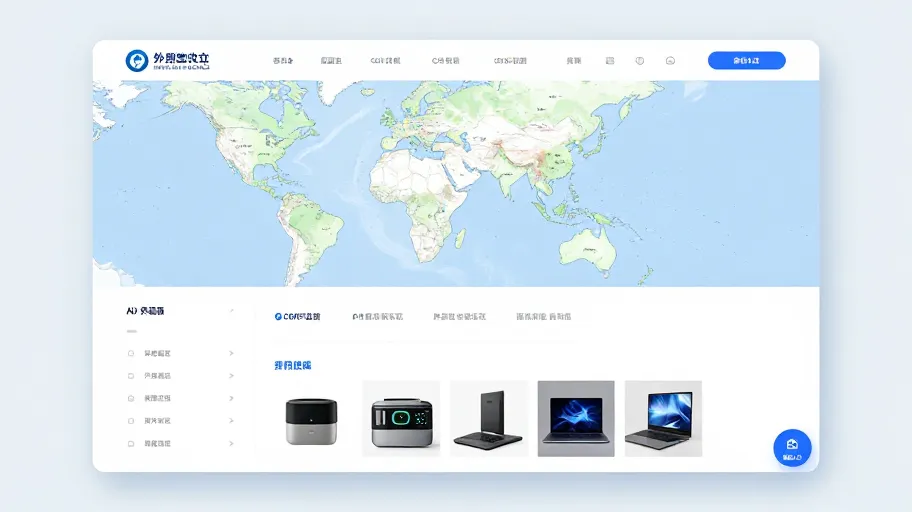
When planning the development of a foreign trade website in Shenzhen, businesses must first clarify their business needs and technical boundaries. A well-designed independent foreign trade website is not only a platform for brand presentation but also a tool for converting overseas inquiries into sales opportunities. Enterprises should establish evaluation criteria from three dimensions: audience targeting, selection of functional modules, and post-launch operation mechanisms. Through thorough preliminary requirements analysis and strict adherence to an acceptance checklist, companies can effectively avoid project delays or discrepancies between the final deliverables and actual business needs. By building upon traditional website development principles, integrating current SEO and GEO optimization strategies, and assessing the potential for future AI CRM integration, businesses can ensure that their independent websites deliver long-term operational value.

90% of Shenzhen SME website projects carry hidden risks right from the start. By adopting systematic requirement analysis, avoid cost overruns and delays, turning your website into a true growth engine rather than a cost black hole.
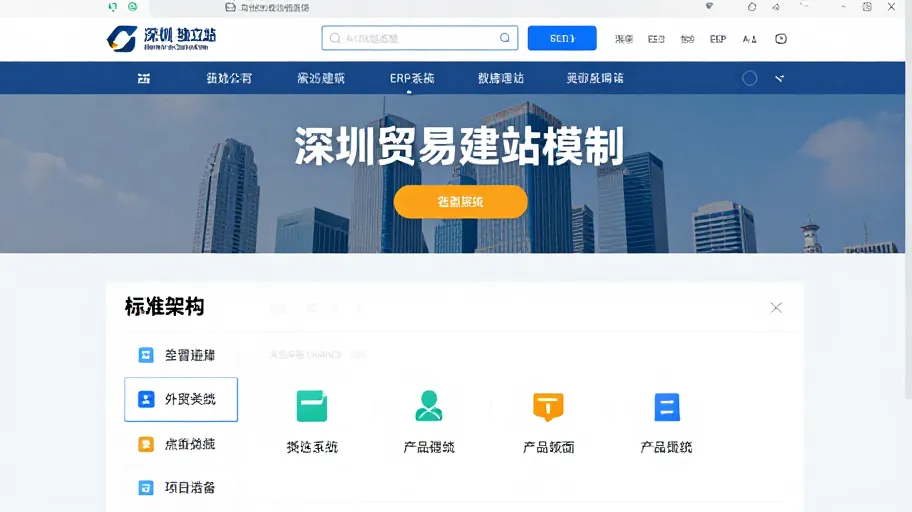
When Shenzhen-based manufacturing and foreign trade enterprises face stagnation in lead conversion rates, slow loading of multilingual markets, or inability to integrate core business systems, it is a clear signal that they should upgrade from standard website building to customized Shenzhen independent sites. Standard templates can solve the problem of launching a website from scratch, but as business complexity increases, fixed frameworks gradually consume growth budgets. The core of custom implementation lies not in visual redesign, but in reshaping underlying data flows, SEO architecture, and customer management workflows to fully align with the enterprise's own trade processes.

In the fiercely competitive Shenzhen market, corporate website construction has long surpassed mere display functions. It’s becoming a crucial lever for acquiring customers, driving conversions, and cutting costs. We’ve dissected five real-world growth nodes to show you how a great website can “make money on its own.”

In the fiercely competitive Shenzhen market, template-based websites can no longer sustain brand growth. Truly effective Shenzhen website development transforms brand strategy into an executable digital experience. Here are the key pathways for businesses to achieve efficient conversions.

Shenzhen foreign trade website construction shouldn’t be a cost black hole. By selecting the right technology, companies can cut customer acquisition costs by over 30%. True conversion starts with being discovered, not piling up features.
Before customers even speak, the system is already prepared with solutions—this isn’t science fiction. AI-powered customer relationship management is turning service from a cost center into a growth engine through real-time insights and self-learning architectures. Let’s see how it works.

Platform traffic is getting more expensive, and the risk of store closures is rising. A group of Shenzhen cross-border merchants are quietly shifting to independent sites—not just changing their path, but rebuilding their business foundations. Technical architecture, data sovereignty, and user assets are becoming the new battleground.

When keyboard rhythm, gaze duration, and even microexpressions become programming optimization signals, Vibe Coding is redefining the efficient programming experience. This isn’t science fiction—it’s a development paradigm already in practice.

For Shenzhen's export companies, gaining customers via independent sites hinges not on building a website, but on creating a self-evolving traffic engine. We dissected the common strategies of five high-growth enterprises—from technology deployment to content operations—each step pointing toward one goal: Let Google Find Customers for You.

Shenzhen businesses have been doing SEO for years but still see no improvement? The problem isn’t effort—it’s direction. True website optimization is no longer about backlinks; it’s a digital projection of local market insights. See how the pros do it.

