

Shenzhen businesses don’t lack content—they simply aren’t understood by AI due to their industry jargon. Seventy-three percent of B2B opportunities begin with AI-native searches, yet only 12% complete AI-ready adaptation—missing the first screen means losing 68% of high-intent leads. This article addresses the AI search gaps faced by hardware startups, SaaS exporters, and cross-border supply chain players, offering a practical five-step diagnostic and reconstruction roadmap.

Shenzhen factories boast substantial independent site traffic, yet very few buyers actually arrive with POC budgets—it's not that they're overlooked, but that AI deems them 'non-executable noise'. This article delves into the GEO implementation gap, using real-world data from Dazhong, Huichuan, and Skyworth to reveal: semantic infrastructure isn't a technical add-on; it's the entry ticket to the overseas procurement chain.
92% of Shenzhen foreign trade multilingual websites are treated by Google as Chinese-language mirrors—not because the translations are inaccurate, but because the technology fails to communicate. This article breaks down, using empirical data and localized architecture, how to make Spanish-language pages genuinely searchable by users in Madrid, enable German sites to automatically include CE certification Schema, and transform multilingualism from a cost center into an inquiry-generating leverage.

For Shenzhen manufacturers expanding overseas, an independent site isn’t ‘built and handed over’—it’s ‘tested and approved before investment’. 73% of first-month lead losses stem from acceptance blind spots—this guide uses real-world failure cases plus actionable checks to turn acceptance from formalism into growth insurance.
Shenzhen export enterprises often find themselves trapped in the 'idle upon launch' dilemma—not due to technological shortcomings, but because of vague requirements, budget misalignment, and unanchored deliveries. This article presents a three-dimensional decision model validated by 17 B2B overseas enterprises, making every cent invested in website building measurable, attributable, and reusable.
Shenzhen businesses see their traffic halved after a revamp? It’s not a lack of technology—it’s broken semantic chains. This checklist, based on empirical data from SE Ranking, Baidu Research Institute, and Bing engineering teams spanning 2024–2025, helps transform your revamp from a “risky move” into a “traffic accelerator.”On average, it shortens the re-indexing cycle to 14 days and boosts core keyword rankings by 68% in the first month.

For Shenzhen foreign trade enterprises, building an independent site isn’t about competing with templates or rushing deadlines; it’s about establishing defenses, creating pathways, and building a growth flywheel. This article exposes the truth behind why 92% of sites are abandoned within six months, using real data to show you: how every yuan invested in website construction can return 3.8 yuan in annual GMV.

Are Shenzhen factories still optimizing their Baidu rankings? Large models no longer care about webpage weights—they only recognize computable knowledge infrastructure. This article gets straight to the heart of GEO: when AI answers “which factory in Shenzhen can perform titanium alloy five-axis machining,” the very first sentence should reference your inspection report—that’s the real starting point for cost reduction and efficiency gains.
Shenzhen companies don’t lack AI—they lack AI that understands production line language. This article tackles the pain point of “false precision” searches head-on, using real data to break down how to transform fragmented knowledge from ERP, WeChat, and PDFs into searchable, traceable, and accountable intelligent assets.
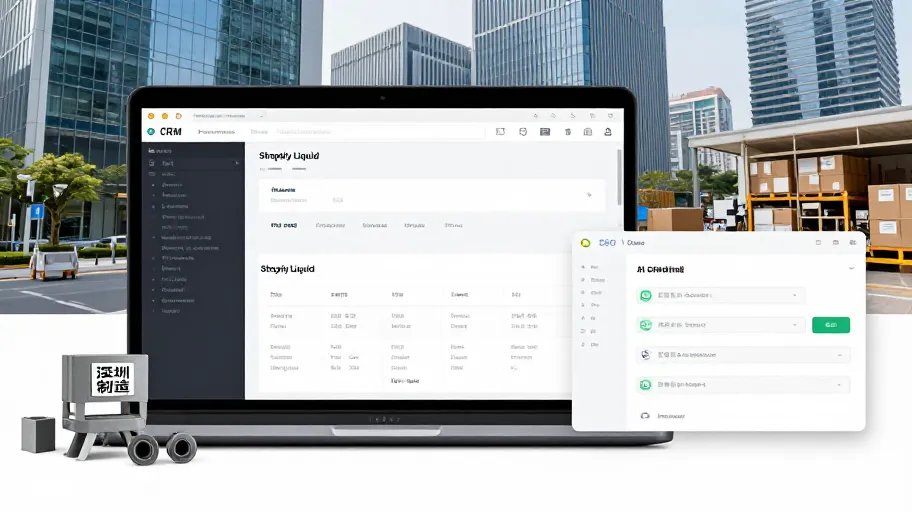
Direct Answer: When your standard website starts limiting your business expression, cannot support differentiated conversion paths, or when multilingual structures in foreign trade affect the understanding of search engines and generative engines (GEO), it's time to consider upgrading to a custom Shenzhen independent site. If your current site is merely "sufficient for information display," then continuing with the standard solution remains more cost-effective. This article provides a framework for you to make this decision yourself, rather than making it for you.
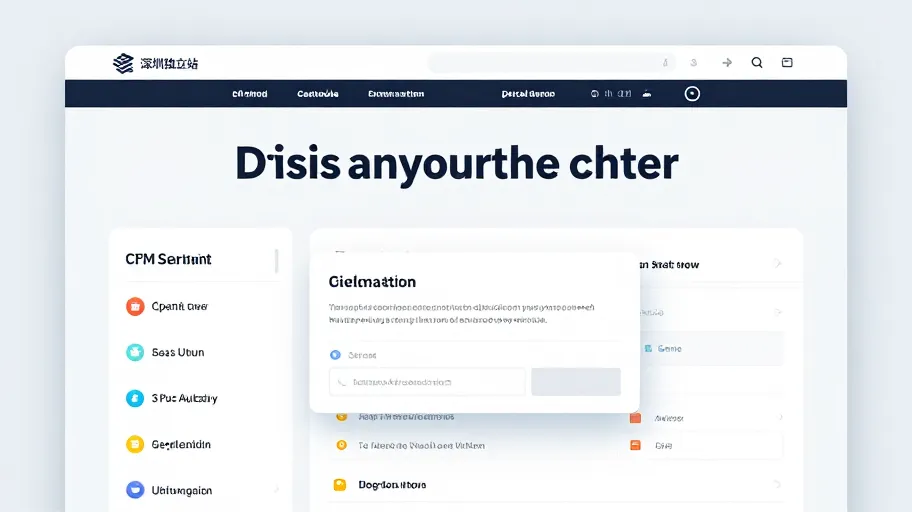
Direct Answer: Whether inquiry automation can be successfully implemented in a Shenzhen independent website hinges not on which tool you purchase, but on first clearly delineating three responsibility boundaries—content is responsible for making target buyers find you and develop interest, the website is responsible for capturing visits and converting that interest into identifiable actions, and the CRM is responsible for consolidating scattered actions into follow-up leads. Until these three responsibilities are clearly defined, any investment in automation is likely to result in mere "tool stacking." This article provides a self-assessment framework and an execution checklist to help businesses make informed decisions.

