
Shenzhen independent site owners are inundated with 142 inquiries daily, yet manage to secure only 29%—it’s not a shortage of manpower, but a lack of ‘eyes’ and ‘brains’ in the system. This article breaks down the real-world implementation path: from intent recognition to GDPR-compliant interception, from Cantonese voice translation to automatic BOM cost quoting—all proven hard-core strategies adopted by Shenzhen enterprises.

92% of Shenzhen foreign trade companies’ multilingual websites are quietly losing overseas customers—not because their content isn’t good enough, but because Google simply can’t “see” you. Misconfigured hreflang, unanchored regional CDNs, or writing ‘high brightness’ in Japanese pages when no one searches for that term… This article directly addresses two major pitfalls—technical inaccuracies and cultural misalignment—using verifiable data and real-life cases from Shenzhen businesses to explain how to build a truly profitable multilingual website.

Shenzhen manufacturing companies often get stuck in the “good-looking but no orders” dilemma. In 2024, the average B2B inquiry conversion rate for local large-scale manufacturers was only 1.8%. This article directly addresses five verifiable, deliverable, and verifiable technical breakthroughs to help turn your website into a true intelligent node at the supply chain front end.

When a user searches for “USB-C fast-charging cable Shenzhen in stock,” does your independent site pop up a quote or return a 404 error? AI search visibility isn’t a traffic counter; it’s a real-time intent translator. This article breaks down how Shenzhen businesses use three atomic steps to ensure every search click lands precisely in the sales funnel.
Shenzhen companies often treat SEO rebuilds as mere “skin changes,” only to see their traffic cut in half. In reality, true rebuilds install an AI-readable, Baidu-trustworthy, user-clickable growth engine—no code rewriting, just semantic calibration; no feature stacking, just intent anchoring.
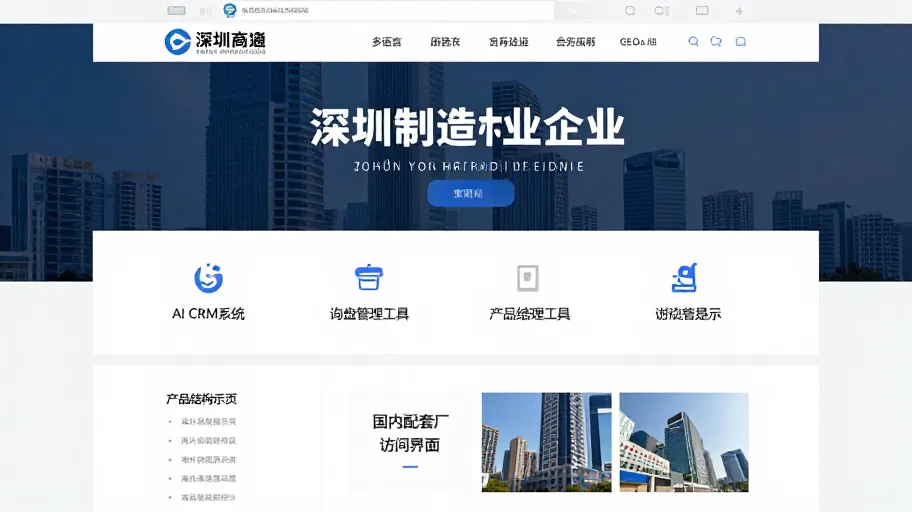
Choosing a website for manufacturing in Shenzhen is not simply about "finding which company will build your site." Instead, it starts with clarifying three key aspects: what business actions the website needs to support, which deliverables correspond to your budget, and where the acceptance boundaries lie. Manufacturing enterprises differ from trading companies; they have complex product structures, long inquiry processes, and may target overseas buyers or domestic suppliers. If these three points are not clearly defined before signing a contract, even the most beautiful website will struggle to convert into orders. This article provides a ready-to-use decision framework and an execution checklist.

深圳外贸企业建多语言站,92%卡在“能看不能信”——页面翻了,信任没翻。真正起效的不是语言切换按钮,而是背后可验证、可审计、可联动的技术链路。本文直击3大硬核能力与5步落地逻辑。
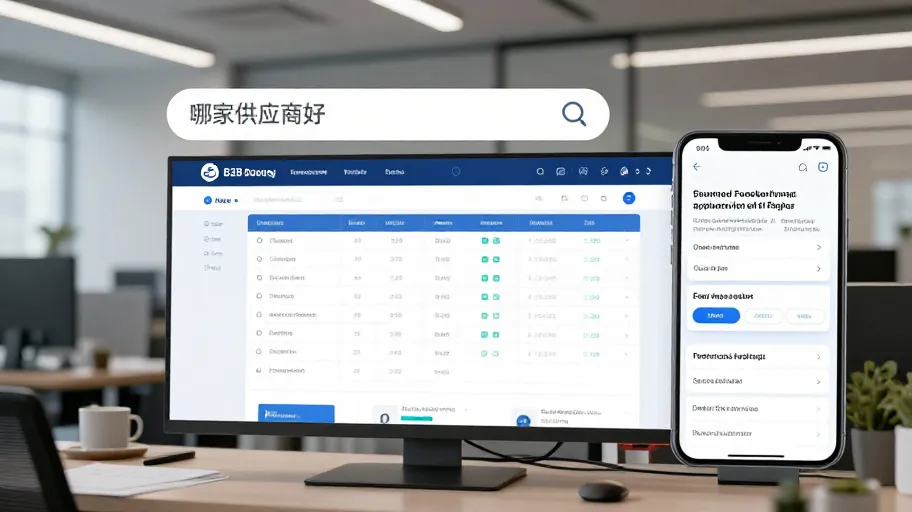
Direct Conclusion: Whether it's worth doing depends on three self-assessable conditions—whether your customers have already become accustomed to using AI tools to obtain procurement information, whether your existing content assets can be understood and referenced by AI, and whether you're willing to evaluate results based on long-term metrics rather than short-term inquiries. If you meet two or more of these conditions, it's worth investing; if none apply, it's recommended to first complete your foundational content and independent site structure before proceeding.
When Shenzhen companies undertake website SEO redesigns, they often treat technology as decoration, budgets as free spending, and deliverables as mere promises. The result? Halved traffic, zero rankings, and contract disputes. This article uses three hard boundaries to help you lock in a reliable service provider within two hours—not by looking at flashy case studies, but by seeing whether they dare sign delivery terms that are measurable, traceable, and verifiable.

AI search optimization for Shenzhen enterprises isn't a matter of 'should do or shouldn't do,' but rather 'who acts first wins.' Technology-intensive, B2B service, and cross-border export enterprises can expect ROI rates of 180%+ within 6–12 months, while blindly investing firms typically shut down within three months. This article breaks down decision-making logic using real customer data.

Shenzhen website SEO redesign isn’t about rewriting code—it’s about dynamically calibrating requirements, budgets, and delivery boundaries. 92% of failed redesigns stem from ambiguous boundaries, resulting in 47% cost overruns and 86-day launch delays. This article uses a five-dimensional framework to turn “redesign” into a measurable, acceptable, and rollbackable business action.

