

After implementing AI CRM, Shenzhen foreign trade enterprises have seen lead response times cut by 68% and LTV increase by 32%. This isn’t magic—it’s integrating Yantian Port logistics, CE certification databases, and WhatsApp first-touch responses into a millisecond-level decision-making engine. Drawing on empirical data from five local B2B exporters, this article breaks down the practical, verifiable, and assembleable logic behind building an AI CRM website.

Shenzhen enterprises are quietly leaving traditional SEO behind—not by piling up keywords, but by letting the AI engine proactively recognize who you are and what you can do. This article breaks down the real-world implementation path: from intent anchors to regional entity binding, each step corresponds to verifiable leaps in customer acquisition.

Shenzhen foreign trade companies lose an average of 37% of high-potential customers annually—not because they aren’t trying hard, but because their tools are stuck in 2010. This article uses real data and localized scenarios to explain how AI CRM can turn independent website visitors into business opportunities in seconds, decode WhatsApp inquiries into fulfillment details in 3.6 seconds, and compress the repurchase cycle from 142 days to 89 days—no abstract concepts, just concrete savings and more orders.


When Shenzhen companies build multilingual websites, the competition isn’t about who translates fastest, but who can genuinely acquire customers, ensure compliance, and close deals in Germany, Brazil, and the UAE. Semantic localization architecture reduces new-language development time from 21 days to 48 hours, cutting customer acquisition costs by $3.4 per dollar invested.
Shenzhen businesses seeing their traffic halved after a revamp? It’s not a UI issue—it’s that search engines “don’t recognize you.” A compliant revamp can shorten the natural traffic recovery cycle from 120 days to 28 days—meaning 37% less lost potential inquiries and a 62% reduction in technical debt. Below, we’ll expose four hidden pitfalls and five counterintuitive points.

Shenzhen foreign trade companies building multilingual sites shouldn’t think adding a translation plugin will suffice—92% of sites are being penalized by Google due to language signal failures. This article dives deep into four core modules: hreflang matrix, dynamic routing, contextual rewriting, and growth flywheels, all based on actual 2025 Shenzhen enterprise test data.
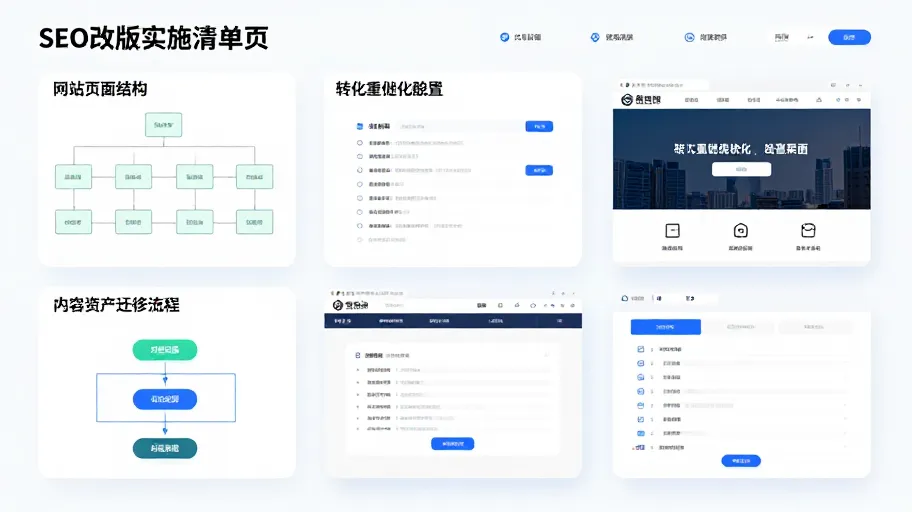
For a Shenzhen website SEO redesign to truly take effect, it's not enough to simply swap out a template. Instead, the process should proceed in four stages: "Page Structure—Content Assets—Conversion Forms—Post-Redesign Operations," with clear definitions beforehand regarding which old URLs to retain and which content weights to migrate. A well-executed redesign can preserve your existing ranking foundation; a hasty one, however, is akin to resetting years of accumulated search engine trust from scratch. Below is a checklist laid out in an actionable sequence, suitable for Shenzhen and Greater Bay Area-based independent e-commerce sites and manufacturing company websites preparing for a redesign.

Building a Shenzhen independent site isn't about writing code—it's about compiling customs policies, payment licenses, and user trust into deliverable functions.
This article breaks down five proven practical paths—from directly connecting GDPR Article 27 to CPTPP origin APIs—each step backed by real ROI data.

92% of AI search traffic on Shenzhen independent sites never enters CRM—not because there’s no traffic, but because data breakpoints cause leads to disappear before reaching sales. By integrating CRM, AI search logs, WhatsApp APIs, and the order middle office into a unified pipeline, first-touch response times have been slashed from 47 hours to 11 minutes within three months. This article dissects a practical data integration framework based on the real-world journeys of 12 Shenzhen-based overseas businesses.
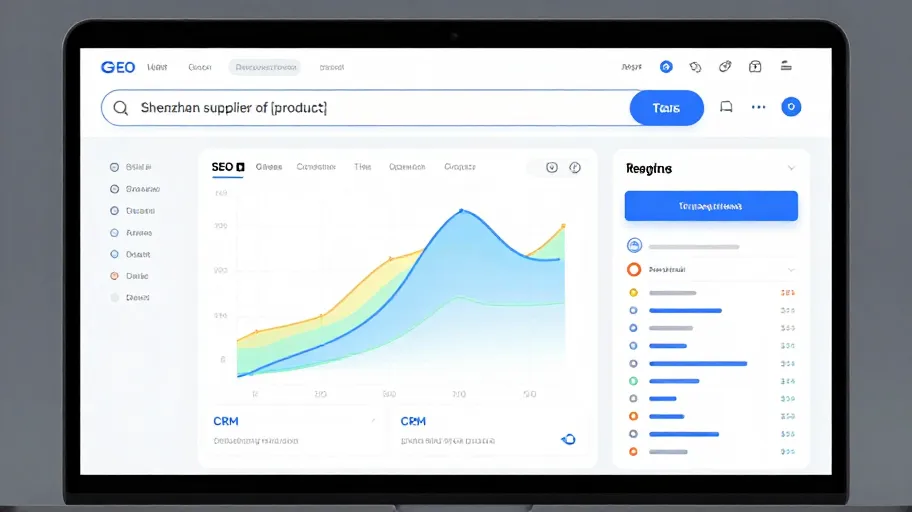
For foreign trade and manufacturing enterprises in Shenzhen operating independent websites, achieving inquiry automation requires integrating at least four types of data: AI search visibility data (GEO), website behavior data (SEO and visits), inquiry conversion data, and CRM lead follow-up data. If these four categories of data are scattered across four different tools, each link will miss critical information, ultimately resulting in situations like "having traffic but no inquiries" or "having inquiries but no one following up." This article provides a practical judgment framework and an execution checklist.

