
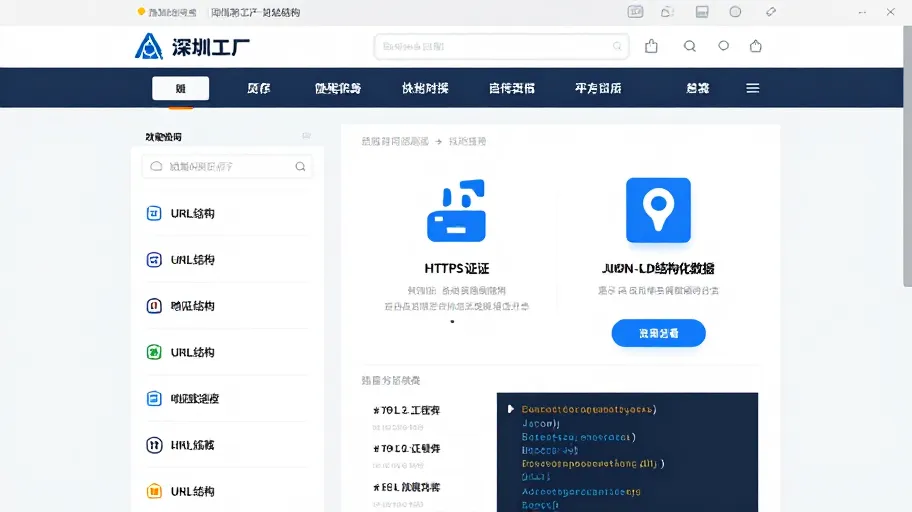
Direct Answer: To determine whether a website SEO redesign in Shenzhen is worthwhile, first consider three key questions—can the current technical structure still support SEO and GEO optimization? Is this redesign aimed at improving "indexing and rankings" or "inquiry conversion"? And can your budget cover just "design changes," or does it need to include "content and data migration"? If these three questions remain unanswered, the redesign may end up being an expensive overhaul rather than a strategic SEO upgrade.
Shenzhen B2B independent sites don’t lack traffic—they simply aren’t trusted by AI. The key to 217% more inquiries in six months lies in enabling Google, Perplexity, and other AI engines to automatically retrieve your process parameters, certificate hashes, and engineer Q&As—it’s not an SEO upgrade; it’s about turning your website into a trusted node on the procurement decision chain.
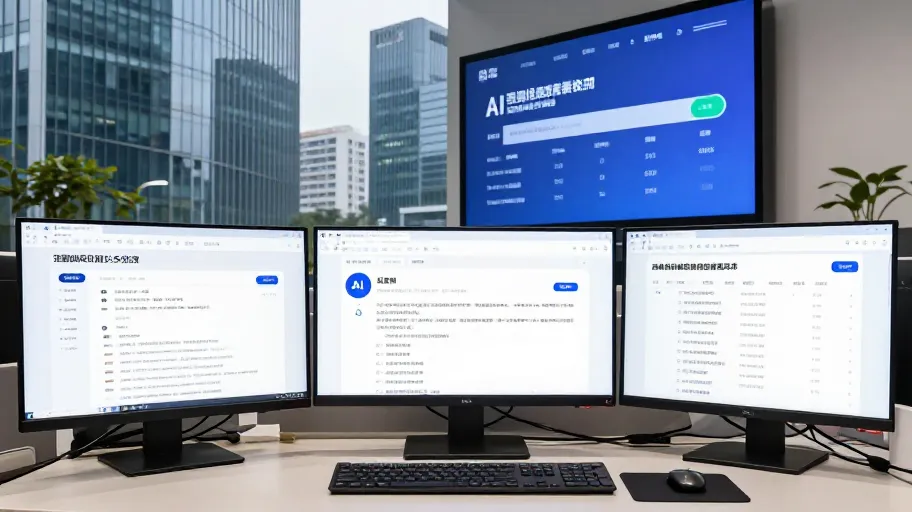
Direct Answer: Implementing AI search optimization (GEO) in Shenzhen enterprises isn't about purchasing a tool or redesigning a few pages; it's about first clearly defining the responsibilities of three key areas—content, website, and CRM. Content is responsible for being understood and referenced by AI, the website ensures proper structure and credibility, while CRM handles lead generation and conversion. Each area has its own role; neglecting any one will render your investment futile. This article provides an actionable framework, a checklist of responsibility boundaries, and recommendations for next steps, enabling companies to conduct self-assessments before making decisions.

Shenzhen foreign trade enterprises are using AI CRM to compress customer response time from 'hours' to 'seconds.' It doesn't just log contacts—it understands 'MOQ negotiable' on WhatsApp, matches Alibaba International inquiries with customs export records, and gives voice to 92% of anonymous visitors.
Below, we dissect five real-world value breakpoints and verifiable ROI pathways.

Shenzhen enterprise website SEO overhaul isn’t about tearing everything down and starting over—it’s about installing smart access control on your old address plate—recognizing people, not addresses, preserving weight, and making search engines understand you better. This article exposes the truth behind why 92% of Shenzhen enterprises have gone ‘silent’ on Baidu, using five verifiable technical pivots to guide you through a 3-month ROI path that doubles natural consultation volume.
Building a Shenzhen independent site isn’t about buying templates and filling in product details. It’s a localized operating system integrating Qianhai gateway, Cantonese SEO, blockchain evidence storage, and direct CNC connectivity. Through five real-life cases, this article explains why compliant configurations can save ¥117 per shipment, why Cantonese subtitles keep users engaged for an extra 210 seconds, and why your independent site is quietly evolving into a supply chain hub.

Shenzhen companies aren't failing at SEO—they're simply facing AI search that no longer recognizes traditional methods. When CRM stays silent, websites lose their voice, and content goes astray, large models directly label you as 'untrustworthy'. Using real-world data and local case studies, this article breaks down how content, websites, and CRM each hold their own turf, turning AI search into your free sales engine.

92% of Shenzhen's foreign trade AI CRMs are still sending 'blind emails'—not because they lack intelligence, but because they fail to see genuine buyer signals. When these five types of data—customs frequency, page heatmaps, LinkedIn trends, search paths, EDM responses—are disconnected, AI is left guessing. This article explains how to use real data streams to turn AI search traffic into traceable, predictable, and replicable sales assets.

The hardcore parameters of Shenzhen factories are being “snatched away” by AI snapshots, yet buyers aren’t clicking through—it’s not that traffic has vanished; it’s that you haven’t yet completed identity verification in generative search. Using real data, local context, and a practical five-step method, this article helps you transform technical documentation into “living credit certificates” on the procurement decision chain.
Shenzhen businesses don't lack traffic—they simply can't get AI to understand 'Huaqiangbei dialect'. With structured intent tagging + Shenzhen manufacturing semantic engine, large models will proactively push customers toward you—not through rankings, but through orchestration.

AI search no longer matches “Shenzhen + keywords”; instead, it understands industry-specific semantics such as “Huaqiangbei’s Same-Day Delivery Capability” or “Qianhai’s AEO Certification Compatibility.” This article presents four verifiable modules to show you how to make AI actively push your content to the right audience—not more exposure, but more accurate leads, faster conversions, and lower costs.

